Sri Lanka is one of the easiest countries in South Asia to travel through: short distances, warm hospitality and widely spoken English. These are the practical details that first-time visitors most often ask us about before arrival.
Before you fly
- Most nationalities need an electronic travel authorisation before arrival — apply through the official portal only and print the confirmation.
- Check your passport has at least six months of validity remaining.
- No vaccinations are compulsory for most travellers, but standard travel jabs and dengue precautions are sensible.
- Travel insurance covering safari jeeps, surfing and hiking is worth the small premium.
Money and tipping
- The currency is the Sri Lankan rupee. Cards work in cities and resorts; carry cash for rural stops, tuk-tuks and markets.
- Change money at bank counters at the airport rather than at hotels.
- Tipping is customary but modest: a small amount for restaurant staff, a daily rate for a driver-guide, a token for temple attendants and safari trackers.
Culture and temple etiquette
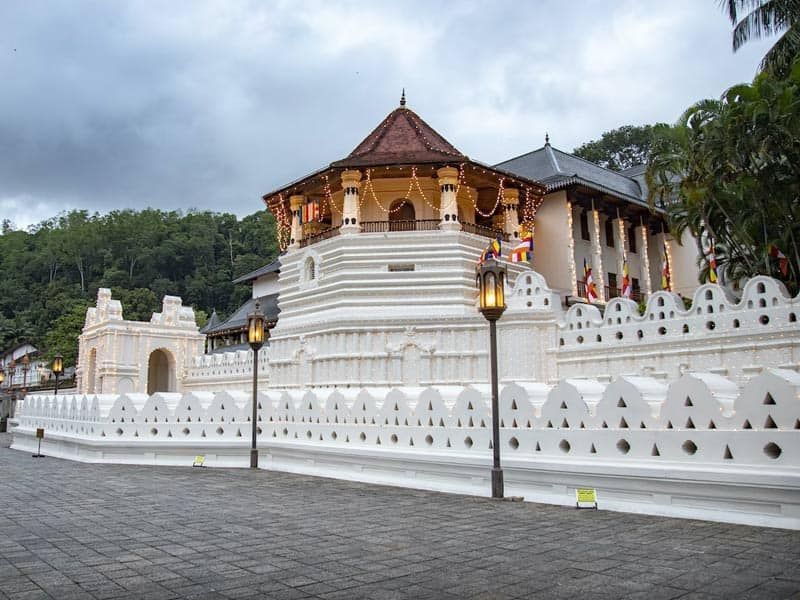
- Cover shoulders and knees at every temple, and remove shoes and hats before entering.
- Never pose with your back to a Buddha statue — it causes real offence and has led to arrests.
- Ask before photographing monks or people at prayer.
- Poya (full moon) days are public holidays when alcohol is not sold and many attractions are busier.
- Use your right hand for giving and receiving. The Sri Lankan head wobble means yes.
Health, food and water
- Drink bottled or filtered water; avoid ice at roadside stalls.
- Sri Lankan curry is genuinely spicy — ask for 'not too spicy' and you will still get flavour.
- Try rice and curry at lunch, kottu roti in the evening, and hoppers for breakfast.
- Mosquito repellent matters most at dawn and dusk, especially near paddy fields and lakes.
Getting around and staying connected
- Buy a tourist SIM at the airport; data is inexpensive and coverage is good outside deep jungle.
- Agree tuk-tuk fares before setting off, or use a metered ride-hailing app in cities.
- Distances look short on a map but roads are slow — assume around 40km/h average outside expressways.
- A private driver-guide is the most time-efficient way to see multiple regions in under two weeks.
What to pack
- Light cotton clothing plus one warm layer for Nuwara Eliya and early hill country mornings.
- A sarong or scarf that doubles as temple cover.
- Reef-safe sunscreen, a hat and sunglasses for open safari jeeps and boats.
- Walking shoes for Sigiriya and Adam's Peak; sandals for everything else.
- A universal adapter — Sri Lanka mainly uses type D and G sockets at 230V.
Frequently asked questions
- Is Sri Lanka safe for tourists?
- Yes. Tourist areas are generally safe and locals are welcoming. Take normal precautions with valuables, be careful in strong coastal currents, and use licensed drivers.
- Can you drink tap water in Sri Lanka?
- No. Stick to bottled or properly filtered water, and refill from your hotel's filtered supply where possible to reduce plastic waste.
- Do people speak English in Sri Lanka?
- English is widely spoken in hotels, restaurants and tourist services, and most guides are fluent. A few words of Sinhala or Tamil are always appreciated.
Want this planned for you?
Local drivers, private vehicles and itineraries built around your dates.
Enquire about this trip
25 Sri Lanka Travel Tips for First-Time Visitors
Tell us your dates, interests and budget — we'll design a tailor-made Sri Lanka itinerary around them and reply with a clear quote within 24 hours.
Start your inquiryOr chat on WhatsAppWe reply within 24 hours · No deposit needed to enquire